
The Dark Truth About Success

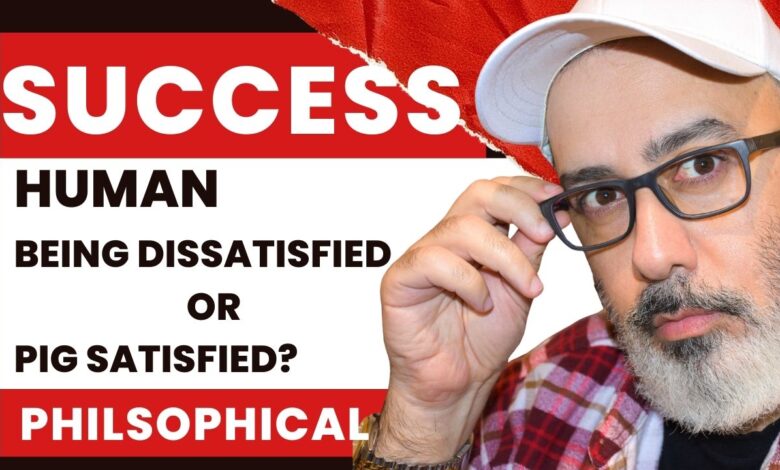
The Lie at the Center of the American Idea of Success: What Philosophy Teaches Us About True Fulfillment
Introduction: The Great American Delusion
We’ve all heard the story. It’s been told so many times that it’s woven into the fabric of our collective consciousness. Work hard, climb the ladder, make your fortune, and you’ll be successful. It’s the American Dream, right? Get the corner office, the big house in the suburbs, the luxury car in the driveway, and somehow, magically, you’ll have made it. You’ll be happy. You’ll be fulfilled. You’ll finally feel like your life meant something.
But here’s the uncomfortable truth that millions of Americans are waking up to every single day: this entire narrative is built on a fundamental lie. And that lie is slowly killing our capacity for genuine fulfillment, destroying our relationships, undermining our health, and leaving us with a profound sense that despite all our achievements, something crucial is missing.
This isn’t just philosophical speculation. Study after study shows that once basic needs are met, additional wealth has minimal impact on happiness. The famous Princeton study by Daniel Kahneman found that emotional well-being rises with income only up to about $75,000 per year—beyond that, more money doesn’t make people happier. Yet we continue to sacrifice everything in pursuit of financial success, convinced that the next promotion, the next raise, the next deal will finally bring us the satisfaction we’re seeking.
What if I told you that the greatest minds in human history—philosophers who spent their entire lives contemplating the nature of the good life—came to radically different conclusions about what constitutes true success? What if the wisdom we need has been sitting in plain sight for thousands of years, ignored in favor of a materialistic definition of success that serves corporate interests more than human flourishing?
Ancient Wisdom: Aristotle and the Purpose of Wealth
Let me take you back about 2,400 years to ancient Greece, to a philosopher whose ideas about success and the good life have shaped Western thought for millennia. Aristotle, the student of Plato and teacher of Alexander the Great, asked what might be the most important question in all of philosophy: What is the highest good for human beings?
His answer wasn’t wealth. It wasn’t fame. It wasn’t power or prestige or any of the markers we associate with success today. It was something he called “eudaimonia”—a Greek word often translated as flourishing, thriving, or deep happiness. But eudaimonia is more than just feeling good; it’s about living well, actualizing your potential, and becoming the best version of yourself.
And here’s what Aristotle said about wealth: “Wealth is evidently not the good we are seeking, for it is merely useful and for the sake of something else.”
Read that again carefully. Wealth is merely useful and for the sake of something else. Money isn’t the destination—it’s just a tool, a means to an end. But somewhere along the way, particularly in modern American culture, we confused the tool for the goal itself. We started treating money as if it were the ultimate measure of a life well-lived, rather than recognizing it as instrumental to achieving other, more important goods.
Aristotle went further. He argued that the highest human goods are activities of the soul in accordance with virtue. In other words, success lies in developing your character, cultivating wisdom, practicing courage, exercising temperance, and living justly. These are the things that make us truly human, that allow us to flourish. Accumulating wealth? That’s just resource management. It might be necessary for flourishing, but it’s not sufficient, and it’s certainly not the point.
The Aristotelian Vision of Human Flourishing
Aristotle believed that humans have a specific function or purpose, just as a knife’s purpose is to cut well or a musician’s purpose is to play music well. Our purpose, he argued, is to exercise reason—the faculty that distinguishes us from other animals. And the life of reason, when lived excellently, produces eudaimonia.
This is radically different from the American conception of success. We tend to think success is about achievement, accomplishment, acquisition—external markers that others can see and measure. Aristotle insists that success is about who you become, not what you accumulate. It’s about the cultivation of your character, the development of virtuous habits, and the full expression of your human capacities.
He also emphasized that eudaimonia is an activity, not a state. You can’t achieve happiness and then rest on your laurels. It requires continuous engagement, lifelong practice, constant striving to live in accordance with virtue. This might sound exhausting to modern ears, but Aristotle would say that this very activity—this engaged, purposeful living—is what makes life worth living.
The Roman Stoics: Redefining Wealth and Poverty
Fast forward a few centuries to ancient Rome, where Stoic philosophy flourished among both slaves and emperors. The Stoics had a radical take on wealth, success, and human happiness that directly challenges everything the American Dream stands for.
Seneca, one of the wealthiest men in Rome and advisor to Emperor Nero, had a front-row seat to observe what extreme wealth does to people. He watched the richest citizens of the empire chase more and more riches, never satisfied, always anxious, constantly comparing themselves to others. And he saw how miserable it made them.
He wrote: “It is not the man who has too little, but the man who craves more, that is poor.”
Think about that radical redefinition. Poverty, according to Seneca, isn’t about your bank account—it’s about your relationship with desire. It’s about the insatiable craving for more that can never be satisfied because there’s always someone with more, always another level to reach, always another marker of success to pursue. The person who feels they don’t have enough, regardless of how much they actually have, is the truly poor person.
Seneca also observed: “No person has the power to have everything they want, but it is in their power not to want what they don’t have, and to cheerfully make good use of what they do have.”
This is the Stoic secret to contentment: it’s not about getting everything you desire, but about desiring what you already have, about finding sufficiency in what’s within your reach. Modern consumer culture operates on the exact opposite principle—creating dissatisfaction, manufacturing new desires, convincing you that you need the next thing to be happy.
Marcus Aurelius: The Emperor Who Questioned Everything
Marcus Aurelius, perhaps the most famous Stoic philosopher, was literally the most powerful and wealthy man in the world—the Emperor of Rome at its height. If anyone could have found happiness in power, prestige, and possessions, it was him. Yet his private journals, now known as “Meditations,” reveal a man deeply skeptical of external markers of success.
He wrote: “Very little is needed to make a happy life; it is all within yourself, in your way of thinking.”
Here was a man who commanded legions, controlled vast wealth, and wielded absolute power, yet he insisted that happiness comes from within, from your character and your perspective, not from your circumstances. He constantly reminded himself that external goods—wealth, fame, power—are “indifferents” in Stoic terminology. They’re neither inherently good nor bad; what matters is how you use them and whether you become attached to them.
Marcus Aurelius also noted: “When you arise in the morning, think of what a precious privilege it is to be alive—to breathe, to think, to enjoy, to love.” Success, in his view, begins with gratitude for the basics of existence, not with the accumulation of surplus wealth and status.
Epictetus: From Slavery to Wisdom
Perhaps the most powerful Stoic testimony comes from Epictetus, who began life as a slave. He had nothing—no freedom, no possessions, no social standing. Yet he became one of history’s most influential philosophers, teaching that true freedom has nothing to do with external circumstances and everything to do with your inner state.
Epictetus taught: “Wealth consists not in having great possessions, but in having few wants.”
He also emphasized the crucial Stoic distinction between what’s in our control and what isn’t: “Some things are within our power, while others are not. Within our power are opinion, motivation, desire, aversion, and, in a word, whatever is of our own doing; not within our power are our body, our property, reputation, office, and, in a word, whatever is not of our own doing.”
The American idea of success focuses almost entirely on things outside our control—wealth, status, reputation, achievements that depend on external validation. Epictetus would say we’re chasing the wrong things, setting ourselves up for inevitable disappointment and anxiety. Real success lies in perfecting what is within our control: our character, our responses, our values, our choices.
Eastern Philosophy: Alternative Visions of Success
Buddhist Wisdom: The Second Noble Truth
Buddhism, founded by Siddhartha Gautama (the Buddha) in the 5th century BCE, offers a diagnosis of the American success problem that’s startlingly relevant today. The Second Noble Truth states that the cause of suffering is “tanha”—often translated as craving, thirst, or attachment.
The Buddha taught: “The root of suffering is attachment.” This doesn’t mean we can’t enjoy things or work toward goals. It means that when we attach our sense of self-worth and happiness to external achievements—when we believe we’ll finally be okay once we get that promotion, that house, that income level—we’re setting ourselves up for suffering.
Why? Because everything is impermanent. Market conditions change. Companies downsize. Economies crash. Health fails. Everything we acquire will eventually be lost. If your sense of success and self-worth is tied to these impermanent things, you’re building your life on quicksand.
Buddhism offers an alternative: cultivate inner peace, develop wisdom and compassion, reduce attachment to outcomes. Success, in Buddhist terms, is about liberation from the cycle of craving and suffering, not about accumulating more things to crave.
Taoist Philosophy: Wu Wei and Natural Success
Lao Tzu, the legendary founder of Taoism, offered yet another radical alternative to the American hustle culture. His concept of “wu wei”—often translated as “non-action” or “effortless action”—suggests that the most successful life flows naturally, without forcing or striving.
The Tao Te Ching states: “In the pursuit of learning, every day something is acquired. In the pursuit of Tao, every day something is dropped.”
And perhaps most provocatively: “Those who know do not speak. Those who speak do not know.” Imagine applying this to modern LinkedIn culture, where everyone is constantly broadcasting their achievements, proving their worth, hustling for visibility. Lao Tzu would see this as the opposite of wisdom.
The Taoist vision of success is about alignment with nature, simplicity, spontaneity, and contentment. It’s about knowing when enough is enough—a concept that’s anathema to consumer capitalism, which requires constant growth, perpetual dissatisfaction, and the belief that more is always better.
Confucian Excellence: Virtue Over Victory
Confucius, the great Chinese philosopher, offered a vision of success centered on moral cultivation and social harmony rather than individual achievement and material gain.
He taught: “The superior man understands what is right; the inferior man understands what will sell.” This cuts right to the heart of the American confusion. We’ve created a culture where “understanding what will sell”—knowing how to make money, how to market yourself, how to maximize profit—is considered the height of intelligence and success.
But Confucius would argue that moral wisdom—understanding what is right, cultivating virtue, contributing to social harmony—is the true measure of success. He said: “The gentleman seeks all that he wants in himself; the small man seeks all that he wants from others.”
Self-improvement, in Confucian philosophy, isn’t about becoming more productive, making more money, or achieving higher status. It’s about becoming more virtuous, more wise, more capable of fulfilling your duties to family and society, more exemplary in your conduct.
Modern Philosophy: New Perspectives on Ancient Problems
John Stuart Mill: The Quality of Pleasures
Jumping to the 19th century, the British philosopher John Stuart Mill made a crucial distinction that directly challenges the American focus on material success. Mill, one of the founders of utilitarianism, argued that not all pleasures are equal—there are higher and lower pleasures, and the higher ones are far more valuable.
He observed: “It is better to be a human being dissatisfied than a pig satisfied; better to be Socrates dissatisfied than a fool satisfied.”
What Mill meant was this: there are pleasures of the mind, of relationships, of creativity and meaning, of intellectual discovery and aesthetic appreciation—and these are fundamentally different from and superior to mere physical or material pleasures. A pig can experience the pleasure of eating; it cannot experience the pleasure of understanding a complex philosophical argument or creating a work of art or deep friendship.
The American definition of success tends to focus on the “pig satisfied” pleasures—consumption, comfort, entertainment, ease. Mill would argue that a life dedicated to accumulating money so you can buy more comfortable pleasures is an impoverished life, a life that fails to develop the distinctly human capacities that make life worth living.
Mill further explained: “Ask yourself whether you are happy, and you cease to be so.” Happiness and success, he suggests, are not things you can pursue directly. They emerge as byproducts of living well, of engaging in meaningful activities, of developing your capacities. The person who constantly asks “Am I successful yet? Am I happy yet?” is like someone trying to fall asleep by trying hard to fall asleep—the very effort defeats the purpose.
Friedrich Nietzsche: Beyond Good and Evil, Beyond Success and Failure
Friedrich Nietzsche, the 19th-century German philosopher, offers perhaps the most radical challenge to conventional notions of success. Nietzsche was deeply critical of what he called “herd morality”—the tendency of people to unthinkingly adopt the values of their society.
He wrote: “The individual has always had to struggle to keep from being overwhelmed by the tribe. If you try it, you will be lonely often, and sometimes frightened. But no price is too high to pay for the privilege of owning yourself.”
Applying this to the American idea of success: most people are chasing a definition of success given to them by society, by their parents, by advertising, by social media. They’ve never stopped to ask: What do I actually value? What kind of life do I want to live? They’re living according to someone else’s value system, and Nietzsche would say they’re not truly living at all—they’re just following the herd.
Nietzsche also said: “He who has a why to live can bear almost any how.” Purpose, meaning, a personal “why”—this is what makes life bearable and meaningful. Money, status, possessions—these are just “hows,” means to various ends. If you haven’t figured out your “why,” if you don’t have a deep sense of purpose, then no amount of external success will satisfy you.
His concept of the “Übermensch” (often translated as “overman” or “superman”) isn’t about being better than others—it’s about transcending conventional values and creating your own meaning. “You have your way. I have my way. As for the right way, the correct way, and the only way, it does not exist,” Nietzsche wrote. Success, in Nietzschean terms, is about authentic self-creation, not conformity to external standards.
Arthur Schopenhauer: The Futility of Desire
Schopenhauer, another German philosopher, offered a pessimistic but psychologically astute analysis of human motivation. He argued that human life is driven by endless striving and desire, and that satisfaction is always temporary.
He wrote: “Wealth is like sea-water; the more we drink, the thirstier we become; and the same is true of fame.”
This perfectly describes the hedonic treadmill that so many successful Americans find themselves on. You work hard to reach a goal, you achieve it, you feel good for a moment, and then almost immediately you adapt to your new circumstances and start wanting something more. The promotion doesn’t satisfy for long. The new house quickly feels normal. The salary increase disappears into lifestyle inflation. And you’re back to striving, unsatisfied, convinced the next achievement will finally do the trick.
Schopenhauer also observed: “A man can be himself only so long as he is alone; and if he does not love solitude, he will not love freedom; for it is only when he is alone that he is really free.” True success, he suggests, requires the capacity to be alone with yourself, to not need constant external validation and stimulation—something that’s becoming increasingly rare in our hyper-connected age.
Existentialism: Creating Meaning in a Meaningless Universe
The existentialist philosophers of the 20th century—Jean-Paul Sartre, Albert Camus, Simone de Beauvoir—argued that there is no inherent meaning or purpose to existence. We are, in Sartre’s famous phrase, “condemned to be free.” We must create our own meaning and values.
Sartre wrote: “Man is nothing else but what he makes of himself.” You are not defined by your job title, your income, your possessions, or any external marker of success. You are defined by your choices, your actions, your projects, your commitments. Success, in existentialist terms, is about living authentically, making genuine choices, taking responsibility for creating your own meaning.
Albert Camus, in “The Myth of Sisyphus,” used the Greek myth of a man condemned to roll a boulder up a hill forever, only to have it roll back down each time, as a metaphor for human existence. But Camus concludes: “One must imagine Sisyphus happy.” Why? Because Sisyphus owns his task. He gives it meaning through his commitment to it. The struggle itself toward the heights is enough to fill a man’s heart.
This is a powerful reframing of success. Even if your work seems repetitive or futile by external standards, if you choose it, commit to it, and find meaning in it, you can be successful in the deepest sense. Conversely, achieving every external marker of success while living inauthentically—doing what you think you should do rather than what you truly choose—is a profound failure.
Simone de Beauvoir added a crucial insight about authentic vs. inauthentic living: “One’s life has value so long as one attributes value to the life of others, by means of love, friendship, indignation and compassion.” Success isn’t just about authentic self-creation; it’s about connection, about how we relate to and value others. The isolated, wealthy individual who has achieved everything for himself but has no meaningful relationships has failed at the most important measure of a human life.
Viktor Frankl: Meaning in the Midst of Suffering
Perhaps no philosopher has more credibility on the question of what makes life meaningful than Viktor Frankl. The Austrian psychiatrist survived three years in Nazi concentration camps, including Auschwitz, where he lost his wife, his parents, and almost everything else. In the camps, stripped of all external markers of success, reduced to a number, subjected to unimaginable suffering, Frankl made observations about human nature that transformed psychology and our understanding of meaning.
His central insight, developed into what he called “logotherapy,” is captured in this statement: “Success, like happiness, cannot be pursued; it must ensue, and it only does so as the unintended side effect of one’s personal dedication to a cause greater than oneself.”
Let that sink in. Success cannot be pursued directly. It’s not a target you aim for. It emerges naturally when you dedicate yourself to something meaningful, something bigger than your own comfort and advancement. The person who makes success their goal will likely fail to achieve it. The person who makes meaning their goal will likely find success along the way.
Frankl also wrote: “Those who have a ‘why’ to live, can bear with almost any ‘how’.” He observed that in the concentration camps, the people who survived longest weren’t necessarily the strongest or healthiest—they were the ones who had a reason to live, a purpose that sustained them. Those who lost their sense of meaning often lost their will to survive.
Apply this to the American context. How many successful people, by conventional measures, find themselves asking: “Is this all there is?” They’ve achieved the “what”—the money, the status, the achievements—but they never figured out the “why.” Without a deeper purpose, without meaning, external success feels hollow.
Frankl identified three main sources of meaning: (1) creating a work or doing a deed, (2) experiencing something or encountering someone (particularly through love), and (3) the attitude we take toward unavoidable suffering. None of these are about accumulating wealth. All of them are available regardless of your economic status.
Where Real Success Actually Lives
In Meaningful Relationships
Aristotle argued that “Without friends, no one would choose to live, though he had all other goods.” Your connections with other people—not the size of your network, not how many followers you have, but the depth and quality of your relationships—this is where fulfillment lives.
The Harvard Study of Adult Development, one of the longest-running studies on human happiness, has tracked participants for over 80 years. The clear finding? It’s not money, fame, or career success that predicts life satisfaction and longevity—it’s the quality of relationships. Close relationships, more than money or fame, are what keep people happy throughout their lives. Good relationships protect our brains, improve our health, and make life meaningful.
Yet the American obsession with professional success often comes at the expense of relationships. We sacrifice time with family for career advancement. We move away from friends for better job opportunities. We’re too busy networking for business to build genuine friendships. We check our phones during dinner with loved ones because a work email might be important. And then we wonder why, despite our success, we feel lonely and disconnected.
The philosopher Martin Buber distinguished between “I-It” relationships (treating others as objects or means to ends) and “I-Thou” relationships (genuine encounters with others as full persons). Success culture encourages I-It relationships: How can this person help my career? What can they do for me? What’s my network worth? But meaning comes from I-Thou relationships, where we encounter others as ends in themselves, not as instruments for our advancement.
In Personal Growth and Virtue
The Stoics believed that the only true good is a well-developed character. Your integrity, your wisdom, your courage, your compassion, your self-discipline—these are the treasures that can never be taken from you. Economic downturns can destroy your wealth. Accidents can destroy your health. Criticism can destroy your reputation. But your character, once developed, is yours.
Socrates, the father of Western philosophy, famously said: “The unexamined life is not worth living.” He also claimed: “To find yourself, think for yourself.” Success, in Socratic terms, requires self-knowledge, critical thinking, the examined life. It’s not about acquiring more stuff; it’s about knowing who you are, what you value, and whether you’re living in accordance with your values.
Modern culture often confuses self-improvement with optimization for success—becoming more productive, more efficient, more effective at achieving external goals. But genuine self-improvement is about becoming a better person: more honest, more courageous, more compassionate, wiser, more self-aware. Which version would you rather be: incredibly successful by conventional measures but ethically compromised, or modestly successful but possessed of genuine virtue?
In Contributing to Something Beyond Yourself
Whether it’s raising good children, creating meaningful work, serving your community, fighting for a cause you believe in, or contributing to human knowledge or culture—success emerges from impact, not income.
The philosopher Bertrand Russell wrote: “The good life is one inspired by love and guided by knowledge.” Love here doesn’t just mean romantic love; it means care for others, for future generations, for humanity. And knowledge means using your mind to its fullest capacity, contributing to understanding. These are the things that make life significant.
Ralph Waldo Emerson offered this powerful definition of success: “To laugh often and much; to win the respect of intelligent people and the affection of children; to earn the appreciation of honest critics and endure the betrayal of false friends; to appreciate beauty; to find the best in others; to leave the world a bit better, whether by a healthy child, a garden patch, or a redeemed social condition; to know even one life has breathed easier because you have lived. This is to have succeeded.”
Notice what’s absent from Emerson’s definition: money, status, power, possessions. Notice what’s present: relationships, appreciation of beauty, making the world better, positively impacting at least one other person. This is a radically different conception of success, yet it resonates deeply when we hear it. Why? Because it speaks to what we actually value, as opposed to what we’ve been told to value.
In Living Authentically
Henry David Thoreau went to Walden Pond to conduct an experiment in simple living. He wrote: “The mass of men lead lives of quiet desperation.” Why? Because they’re chasing someone else’s definition of success instead of figuring out what actually matters to them. They’re living according to scripts written by society, family expectations, advertising, social pressure—but never according to their own authentic values.
Thoreau also observed: “Most of the luxuries, and many of the so-called comforts of life, are not only not indispensable, but positive hindrances to the elevation of mankind.” In other words, much of what we think we need for success—the luxury goods, the status symbols, the comfortable life—actually gets in the way of genuine human development.
He famously advised: “Simplify, simplify.” And: “A man is rich in proportion to the number of things he can afford to let alone.” True wealth, true success, is about needing less, not having more. It’s about the freedom that comes from not being enslaved to your possessions, your job, your image, your never-ending list of desires.
Living authentically means asking: If I stripped away all the external expectations—what my parents wanted for me, what society says I should want, what would impress others—what do I actually value? What kind of life do I want to live? Who do I want to become? And then having the courage to live according to those authentic values, even when they differ from conventional markers of success.
The Psychology of Success: Modern Research Confirms Ancient Wisdom
Remarkably, modern psychology and neuroscience have confirmed many of the insights of ancient philosophy about success and happiness.
The Hedonic Treadmill
Research on “hedonic adaptation” shows that humans quickly adapt to positive changes in their circumstances. Win the lottery? You’ll be happier for a while, but within a year or two, you’ll likely return to your baseline level of happiness. Get a major promotion? Same pattern. Buy your dream house? After the initial excitement wears off, it just becomes your house.
This is exactly what Schopenhauer and the Buddha predicted: desire is insatiable, satisfaction is temporary, chasing external goods leads to a perpetual cycle of striving and disappointment. The only way off the hedonic treadmill is to stop tying your happiness to external achievements.
Self-Determination Theory
Psychologists Edward Deci and Richard Ryan developed Self-Determination Theory, which identifies three fundamental psychological needs: autonomy (feeling in control of your life), competence (feeling capable and effective), and relatedness (feeling connected to others).
Their research consistently shows that when these needs are met, people flourish—regardless of wealth or conventional success. When these needs aren’t met, even very successful people feel unhappy and unfulfilled. Notice that none of these fundamental needs are about accumulating wealth or achieving status. They’re about the quality of your experience, your sense of agency, your relationships.
Flow States and Intrinsic Motivation
Psychologist Mihaly Csikszentmihalyi’s research on “flow”—those optimal experiences when you’re completely absorbed in a challenging activity—shows that some of life’s most satisfying moments have nothing to do with passive pleasure or material comfort. They come from stretching yourself to accomplish something difficult and worthwhile.
He found that people are happiest when they’re in flow states, completely engaged in activities that challenge their skills. This happens more often to people doing meaningful work, pursuing hobbies, or engaging in deep conversation than to people watching TV, shopping, or consuming expensive entertainment. In other words, Aristotle and Mill were right: the higher pleasures of active engagement are more satisfying than the lower pleasures of passive consumption.
Social Connection and Longevity
Meta-analyses of hundreds of studies have found that social connection is more predictive of longevity than obesity, smoking, or lack of exercise. Loneliness and social isolation are as dangerous to your health as smoking 15 cigarettes a day.
Yet the pursuit of conventional success often requires sacrificing social connection. Long work hours, constant travel, geographic moves for career advancement, prioritizing work over relationships—these are all considered normal parts of “paying your dues” and “climbing the ladder.” But they’re literally killing us, while we chase a definition of success that doesn’t actually make us happy or healthy.
The Corporate Capture of Success
It’s worth asking: Who benefits from the American definition of success? Who profits when millions of people believe that success means consuming more, earning more, achieving more?
The answer is obvious: corporations, advertisers, and the economic elite. Consumer capitalism requires perpetual growth, which requires perpetual consumption, which requires perpetual dissatisfaction. If people were genuinely content, if they found meaning in relationships and personal growth rather than in acquisition and status, the economy—as currently structured—would collapse.
So we’re bombarded with messages designed to create dissatisfaction: You’re not successful enough. You don’t have enough. You don’t earn enough. You’re falling behind. Others have more than you. Here’s what you need to buy to feel successful. Here’s the car that signals you’ve made it. Here’s the watch that proves your worth. Here’s the vacation that shows you’re living your best life.
Advertising exists to make you feel that you lack something, to create a problem that the advertised product can solve. The entire industry is premised on manufacturing insecurity and dissatisfaction. And the cumulative effect of being exposed to thousands of these messages per day is a population that believes success is always just out of reach, always requiring one more purchase, one more achievement, one more status symbol.
The philosopher Michel Foucault would call this “disciplinary power”—the way institutions and cultural norms shape our desires and behavior without us even realizing it. We think we’re freely choosing to pursue success, but we’ve been disciplined into desiring a very specific kind of success that serves corporate interests more than human flourishing.
The Cost of the American Dream
What are we sacrificing in pursuit of the conventional American definition of success?
Time: The average American works more hours than workers in any other developed nation. We have less vacation time, less parental leave, less time for leisure and relationships. We’re time-poor even when we’re financially wealthy. And time is the one resource we can never get back.
Health: Stress-related illness, burnout, anxiety, depression—all are epidemic in high-achieving populations. We sacrifice sleep, exercise, healthy eating, and stress management for career advancement. We work ourselves sick in pursuit of success, then spend our money on healthcare to deal with the consequences.
Relationships: Marriages fall apart due to work stress and lack of time together. Children grow up seeing their parents stressed and absent. Friendships atrophy because we’re too busy. We miss the important moments—birthdays, recitals, conversations—because work comes first.
Authenticity: We present polished versions of ourselves on LinkedIn. We say yes to opportunities we don’t want because they’ll “look good on the resume.” We pursue careers that impress others rather than fulfilling us. We become strangers to ourselves, unsure what we actually want because we’re so focused on what we should want.
Presence: We’re physically present but mentally absent, always thinking about work, always checking email, always worried about the next thing. We’re on vacation but can’t relax. We’re with our kids but thinking about deadlines. We’ve lost the capacity to be fully present in our own lives.
Joy: Perhaps most tragically, we sacrifice joy—the simple pleasures of existence, the delight in everyday beauty, the satisfaction of meaningful work, the warmth of human connection. We’re always striving for some future state where we’ll finally be successful enough to relax and enjoy life. But that state never arrives because the goalposts keep moving.
Redefining Success: A Philosophical Framework
So if the American definition of success is flawed, what should we put in its place? Drawing on the philosophical wisdom we’ve explored, here’s an alternative framework:
Success as Eudaimonia (Aristotle)
Success is flourishing, actualizing your potential, living in accordance with virtue. It’s about who you’re becoming, not what you’re accumulating. Ask yourself: Am I developing my capacities? Am I growing in wisdom, courage, temperance, and justice? Am I becoming the best version of myself?
Success as Sufficiency (Stoics and Buddha)
Success is having enough—enough material resources to meet your needs and pursue meaningful activities, enough wisdom to know when you have enough, enough discipline to not crave more than enough. Ask yourself: What is actually sufficient for a good life? Am I confusing wants with needs?
Success as Meaning (Frankl and Existentialists)
Success is living a meaningful life, dedicating yourself to something beyond yourself, making choices that align with your deepest values. Ask yourself: What gives my life meaning? What am I living for? Will I look back on this time with satisfaction or regret?
Success as Connection (Modern Psychology and Philosophy)
Success is cultivating deep, meaningful relationships, contributing to your community, loving and being loved. Ask yourself: Who would I call in a crisis? Who really knows me? Whose life am I enriching?
Success as Authenticity (Existentialists and Thoreau)
Success is living according to your own values rather than society’s expectations, making genuine choices, being true to yourself. Ask yourself: Am I living my life or someone else’s idea of what my life should be? What would I do if I didn’t care what anyone thought?
Success as Contribution (Mill, Russell, and Others)
Success is making the world a bit better, using your unique talents and circumstances to benefit others, leaving a positive legacy. Ask yourself: How am I contributing? What will outlive me? What positive impact am I having?
Practical Steps Toward Redefined Success
Understanding philosophically that the conventional definition of success is flawed is one thing; actually living according to an alternative definition is another. Here are some practical steps:
1. Conduct a Values Audit
Write down what you actually value—not what you think you should value, but what genuinely matters to you. Then look at how you spend your time, money, and energy. Does your actual life align with your stated values? If not, what needs to change?
2. Define “Enough”
Calculate what income level actually meets your needs plus a reasonable buffer. Then work backward: What kind of work would allow that lifestyle while also allowing time for what matters? Many people discover they’re working far more than necessary to fund a lifestyle inflated by status anxiety rather than genuine needs.
3. Measure What Matters
If what gets measured gets managed, start measuring the right things. Track hours spent in meaningful conversation, time in flow states, acts of kindness, moments of gratitude—not just income, net worth, and career achievements.
4. Build Protection Against Consumer Culture
Recognize advertising for what it is—an attempt to manufacture dissatisfaction. Reduce exposure to ads. Practice gratitude for what you have. Question every “want” to determine if it’s authentic or manufactured.
5. Invest in Relationships
Schedule time for important relationships like you’d schedule an important meeting. Protect that time. Put the phone away. Be present. Remember: no one on their deathbed wishes they’d spent more time at the office, but many wish they’d spent more time with loved ones.
6. Develop Your Character
Identify one virtue you want to cultivate—patience, courage, generosity, honesty—and work on it deliberately. Philosophy isn’t just about thinking; it’s about practice, about actually becoming better.
7. Find Your Why
If you don’t have a clear sense of purpose, explore. Volunteer, try new activities, reflect on what makes you feel alive. Your “why” might be raising good humans, creating beauty, solving problems, serving others, pursuing truth—but it needs to be yours, not someone else’s.
8. Practice Simplicity
Experiment with living more simply. You might discover that Thoreau was right—that much of what we think we need is actually a hindrance, and that freedom comes from needing less.
Conclusion: The Question That Changes Everything
The lie at the center of the American idea of success is that it’s quantifiable, that it can be measured in dollars and status symbols, that it’s about external achievement rather than internal development, that it’s about having rather than being.
But the philosophers across millennia—from ancient Greece to modern existentialism, from Roman Stoics to Eastern wisdom traditions—tell us something radically different: real success is qualitative. It’s measured in meaning, in character, in relationships, in growth, in contribution, in authenticity.
So I’ll leave you with the question that might change everything: If you achieved everything the culture tells you success looks like—the money, the status, the possessions, the admiration—but you did it at the cost of your relationships, your integrity, your health, your sense of purpose, your authentic self… would you actually be successful?
Or would you just be rich?
More importantly: What are you going to do with this knowledge? Because understanding that the conventional definition of success is a lie is only the first step. The harder step—the step that requires genuine courage—is living according to a different definition, even when everyone around you is still chasing the old dream.
As Socrates said: “The secret of change is to focus all of your energy not on fighting the old, but on building the new.”
What new definition of success will you build for yourself?
The philosophers have shown us the way. The research has confirmed their insights. The choice, as it always has been, is yours. You can continue chasing someone else’s dream, or you can wake up and start living your own life, according to your own values, in pursuit of genuine flourishing rather than mere financial success.
The American Dream promised that material success would bring happiness. Philosophy and psychology both tell us this is backwards: cultivate meaning, relationships, virtue, and purpose—and whatever success you need will follow.
In the end, success isn’t something you have. It’s something you are. And becoming successful in this deeper sense—becoming a person of character, wisdom, and authenticity who lives meaningfully and contributes to others—is the work of a lifetime. But unlike the pursuit of wealth and status, it’s work that actually fulfills.
The question isn’t whether you’ll be successful by conventional standards. The question is whether you’ll be successful by standards that actually matter, by standards you’ll be proud of when you look back on your life, by standards that honor your humanity rather than reducing it to economic productivity.
Choose wisely. Your one precious life depends on it.
References and Further Reading
- Aristotle – “Nicomachean Ethics”
- Seneca – “Letters from a Stoic” and “On the Shortness of Life”
- Marcus Aurelius – “Meditations”
- Epictetus – “Discourses” and “Enchiridion”
- Viktor Frankl – “Man’s Search for Meaning”
- John Stuart Mill – “Utilitarianism”
- Friedrich Nietzsche – “Thus Spoke Zarathustra” and “Beyond Good and Evil”
- Arthur Schopenhauer – “Essays and Aphorisms”
- Henry David Thoreau – “Walden”
- Jean-Paul Sartre – “Existentialism is a Humanism”
- Albert Camus – “The Myth of Sisyphus”
- Simone de Beauvoir – “The Ethics of Ambiguity”
- Lao Tzu – “Tao Te Ching”
- Confucius – “The Analects”
- The Buddha – “Dhammapada”
- Ralph Waldo Emerson – “Self-Reliance” and “The American Scholar”
- Bertrand Russell – “The Conquest of Happiness”
- Mihaly Csikszentmihalyi – “Flow: The Psychology of Optimal Experience”
- Martin Seligman – “Authentic Happiness”
- Daniel Kahneman – Research on hedonic adaptation and income
- Harvard Study of Adult Development – Robert Waldinger